Intent
In line with the Batley Parish Curriculum Statement, it is our aim to provide all children with high quality learning in each curriculum area. We have chosen to follow the Kapow Computing scheme of work as this provides a clear teaching and learning structure and offers professional development for each lesson for the non-specialist teacher.
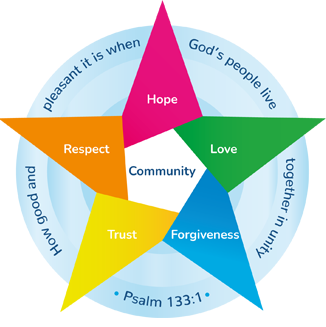
At Batley Parish CE JIN School it is our intention to underpin our learning with our school values.
Community: We care for, support and protect our children whilst they are growing and learning with us and encourage them to do the same for each other and the wider community. We recognise how vital it is that our children learn about online safety and this is at the heart of our computing curriculum and the first thing that every child learns.
Hope: We inspire each child to become a confident, inquiring citizen with an enthusiasm and desire to learn and explore. We value and promote good understanding of computer programs and skills so our children can apply their knowledge in aspects of their everyday life. This will also broaden and inspire opportunities for their future.
Respect: We develop each child to be capable of achieving in life, to develop academically and socially, and to succeed in school and beyond. With the growing use of technology in our society we instill the belief in our children that with their increasing knowledge of the Computing world anything is possible. Through our curriculum, we intend for pupils not only to be digitally competent and have a range of transferable skills at a suitable level for the future workplace, but also to be responsible online citizens.
The children are able to tinker with the software and programs as this forms a part of the ethos of the scheme as we want to develop pupils’ confidence when encountering new technology, which is a vital skill in the ever evolving and changing landscape of technology.
The scheme of work enables pupils to meet the end of Key Stage Attainment targets outlined in the National curriculum and the aims align with those in the National curriculum. When used in conjunction with Kapow’s RSE & PSHE scheme, our Computing scheme of work also satisfies all the objectives of the DfE’s Education for a Connected World framework. This guidance was created to help equip children for life in the digital world, including developing their understanding of appropriate online behaviour, copyright issues, being discerning consumers of online information and healthy use of technology.
Implementation
The Kapow Primary scheme of work is designed with three strands which run throughout:
- Computer science
- Information technology
- Digital literacy
Our National curriculum mapping document shows which of our units cover each of the national curriculum attainment targets as well as each of these three strands.Our Progression of skills shows the skills that are taught within each year group and how these skills develop year on year to ensure attainment targets are securely met by the end of each key stage.
The scheme is organised into five key areas, creating a cyclical route through which pupils can develop their computing knowledge and skills by revisiting and building on previous learning:
- Computer systems and networks
- Programming
- Creating media
- Data handling
- Online safety
The implementation of the scheme ensures a broad and balanced coverage of the National curriculum requirements, and the ‘Skills showcase’ units provide pupils with the opportunity to learn and apply transferable skills. Where meaningful, units have been created to link to other subjects such as science, art, and music to enable the development of further transferable skills and genuine cross- curricular learning.
Lessons incorporate a range of teaching strategies from independent tasks, paired and group work as well as unplugged and digital activities. This variety means that lessons are engaging and appeal to those with a variety of learning styles.
Differentiated guidance is available for every lesson to ensure that lessons can be accessed by all pupils and opportunities to stretch pupils’ learning are available when required. Knowledge organisers for each unit support pupils in building a foundation of factual knowledge by encouraging recall of key facts and vocabulary.
Strong subject knowledge is vital for staff to be able to deliver a highly effective and robust computing curriculum. Each of the units of lessons include teacher videos to develop subject knowledge and support ongoing CPD.
A range of computing resources are also available. There are chrome books and iPads available for class use.
Impact
The impact of Kapow Primary’s scheme can be constantly monitored through both formative and summative assessment opportunities. Each lesson includes guidance to support teachers in assessing pupils against the learning objectives and each unit has a unit quiz and knowledge catcher which can be used at the start and/ or end of the unit.
After the implementation of Kapow Primary Computing, pupils should leave school equipped with a range of skills to enable them to succeed in their secondary education and be active participants in the ever-increasing digital world.
The expected impact of following the Kapow Primary Computing scheme of work is that children will:
- Be critical thinkers and able to understand how to make informed and appropriate digital choices in the future.
- Understand the importance that computing will have going forward in both their educational and working life and in their social and personal futures.
- Understand how to balance time spent on technology and time spent away from it in a healthy and appropriate manner.
- Understand that technology helps to showcase their ideas and creativity. They will know that different types of software and hardware can help them achieve a broad variety of artistic and practical aims.
- Show a clear progression of technical skills across all areas of the National curriculum – computer science, information technology and digital literacy.
- Be able to use technology both individually and as part of a collaborative team.
- Be aware of online safety issues and protocols and be able to deal with any problems in a responsible and appropriate manner.
- Have an awareness of developments in technology and have an idea of how current technologies work and relate to one anothe
- Meet the end of key stage expectations outlined in the National curriculum for Computing.